Boom & Barrier Deployment
Specialised containment booms and barriers intercept and concentrate incoming sargassum before it reaches the beach, protecting the shoreline and reducing the volume requiring removal.

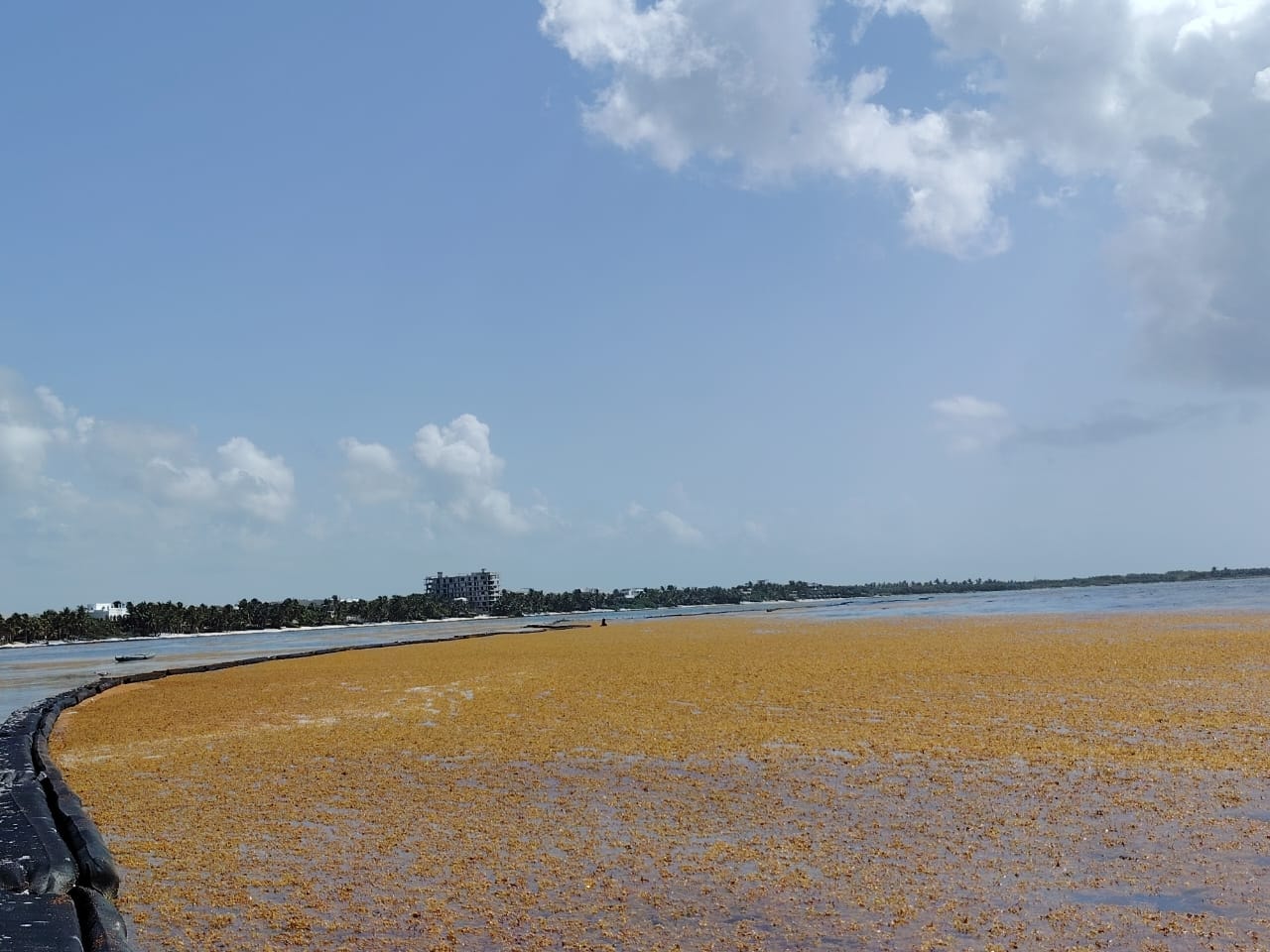
Boom deployment, precision interception, Geocylinder® dewatering — protecting hotels, beaches, bays, ports, marinas and coastal communities across the Caribbean.
Nearshore operations protect what matters most at the coast — site by site, bay by bay, asset by asset.
Specialised containment booms and barriers intercept and concentrate incoming sargassum before it reaches the beach, protecting the shoreline and reducing the volume requiring removal.
Proprietary Geocylinder® geotextile dewatering systems separate seawater from sargassum biomass on-site, dramatically reducing the weight and volume of material requiring transport and disposal.
Site-specific operational protocols adapted to each location — hotel beach, public bay, port entrance, marina, or coastal community — with continuous monitoring and adjustment.
The Geocylinder® dewatering system is a central element of the Golden Tides® Nearshore operational toolkit. Geotextile containment tubes receive pumped sargassum slurry and allow seawater to drain through the fabric, concentrating the biomass and reducing the volume and weight of material requiring removal by up to 80–90%.
Sargassum is pumped from the water surface into large geotextile Geocylinder® tubes. Seawater drains through the permeable fabric under gravity, concentrating the sargassum biomass inside. The dewatered material is then collected and removed from the coastal zone — dramatically reducing transport costs and logistical burden compared to wet sargassum removal.
Containment booms are deployed in configurations matched to the specific coastal geometry, current patterns and sargassum arrival direction at each site. Booms concentrate incoming sargassum into collection zones where pumping and transfer to Geocylinder® units can be conducted efficiently.
Each nearshore deployment follows a structured operational protocol adapted to the specific site, coastal geometry, sargassum arrival patterns and client requirements.
Standard operational sequence:
Nearshore operations are designed for any coastal asset or jurisdiction requiring reliable, site-specific sargassum management.
Protecting beach frontage, swimming areas and waterfront amenities — maintaining the guest experience and protecting tourism revenues during sargassum season.
Keeping port approaches, marina basins and navigation channels clear of sargassum accumulation — protecting vessel operations and port infrastructure.
Protecting public beach access, coastal amenities and community assets — supporting municipal authorities and tourism boards in maintaining coastal quality.
Territory-wide nearshore management programmes for governments and ministries responsible for coastal protection, tourism infrastructure and public health.
Protecting desalination plant intakes, cooling water systems, aquaculture facilities and other coastal infrastructure from sargassum ingestion and fouling.
Protecting the value and operational continuity of coastal real estate, resort developments and marine tourism assets during sargassum events.
Hotels, governments, port authorities, marina operators and investors may request a confidential site assessment and operational briefing.